Tuesday, 17 July 2012

plums et al.

July marks the start of the plum season....so keep an eye out in the hedgerows for them in this usual order from July through to October.

1)from mid July - greengages - juicy and tart - great for chutneys and jams
2)July into Aug - cherry plums - small and juicy
3)from Late Aug - victorias (usually escapee trees self seeded from gardens) - delicious torn open with your thumbs when fully ripe
4)from Sep - damsons - perfect jam
5)Sep onwards - sloes/blackthorns - perfect from pricking and steeping in alcohol

And as it's July...here's the low hanging fruit off one of our favourite wild greengage trees.


These will be made into a couple of jar's of jam, and also - they curiously the jam we made last year with them tastes a bit like Mango Chutney, so we're going to spice up a batch of the jam and throw in a token mango to make some hedgerow curry chutney.

Tj@TheForagersNook

Sunday, 15 July 2012

Cheriton Hill to Etchinghill via Summerhouse Hill

A day of hills along the North Downs Way, back down to Eltham Valley Way, round Summerhouse Hill, and back up the steep sided Downs above the channel tunnel terminal.

on today's list, the wet spell has kept the fungi season going.

Jews Ear Fungus


And the wild apples along the Eltham Valley link road behind the Channel Tunnel are swelling nicely with all this rain.


And for the perfect addition to home made pasta and pizza sauces - wild marjoram - now more obvious now it is coming into flower - pick and rub it - it's aroma is unmistakably mediterranean

The North Downs and Pilgrims Way are covered in it, a wonderful reminder of the paths taken by our invading latin ancestors.


PS - my next article in AWalkingInTheGarden is due out next month  - subscribe now.


Saturday, 7 July 2012

Preview of a forage with "The Minnis" Chefs

A couple of months back, via twitter, the Chef's at The Minnis - Birchington asked if I would take them out for a sea shore forage, to see what there might be on offer to tempt their taste buds.

As a combination of weather, other plans, and tide times have scuppered efforts so far, I managed to sneak past one evening and did a little "test forage".

So, in advance of our foraging wander, here's the sort of things we might find this summer - there were plenty more - but only passed by on a cycle, so snapped the more obvious ones.


Above the tide line

Behind the beach huts are big patches of Purslane.


Sea Purslane - wonderful succulent leaves - eat raw in a crunchy well dressed salad, or like Samphire, briefly blanch and serve in a warm salad with a simple vinaigrette.


Down the steep banks from the foot patch to the sea look out for mallow


it's gelatinous leaves can be deep fried to make green crips - perfect bar snacks
or used in soups as thickeners, as when boiled exude their gelatinous protein rich mucilage (often used in middle east/north african soups and stews)
it's pretty pink flowers used in salads, and even the seed heads later which resemble small round cheeses before they ripen.

Along the footpath by the cabins are also some herbs - patch of spear mint growing happily


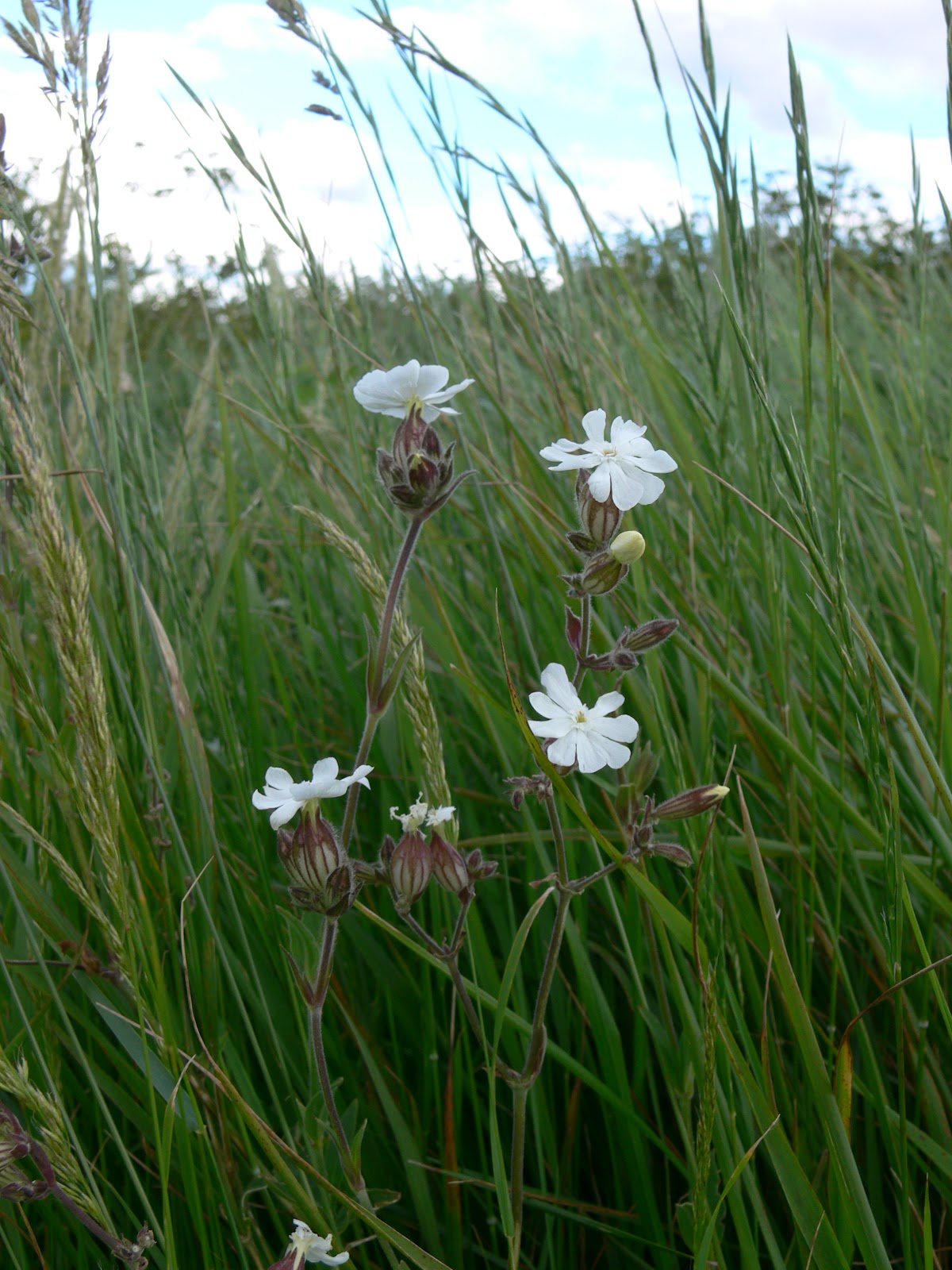
Bladder campion - worth coming back to next spring for the sweet young shoots and leaves


All along this grassy bank are ox eye daisies (young leaves, unopened flower heads chopped in salads, or flowers, petals added later) most of the common "greens/wild leaves" & thistles.

Below the tide line

Sea Weeds


bright green Sea-lettuce is abundant in the rock pools of the chalk reef, as are dulse, bladder wracks, and the odd frond of kelp in the deep water.  salads to sushi via stir-fries - take your pick.

Shell fish - (although the water's a little warm to guarantee quality during summer months in Kent, and they should be left to breed in peace)

native oysters - though observe minimum sizes (these are all too small)
and also winkles by the bucket load - For the patient ones amongst us - boil up a bucket of winkles, then pick them out with a pin for a mini snail feast


Pacific Rock Oysters (foreign imports - invasive - so no minimum size - fill your buckets!)
best used shucked, and cooked - wrapped and grilled (http://foragersnook.blogspot.co.uk/2012/05/wild-oysters-marsh-samphire.html) - or added to paella's, or even Beef and Oyster stew or pies - for a taste of old London town.


in deeper waters there are also mussels - perfect for a winter paella.

and don't forget to turn the rocks carefully - a bucket of big shorecrabs makes a scrimpers version of lobster bisque - pick out the larger claw meat once boiled, blitz the rest, strain, and follow any good receipe for a lobster bisque.

The rock pools are also teaming with little shrimps - with a net, worth a bit of fun catching the bigger ones, boil and pick from the shells for sweet tasty morsels.


Tj@TheForagersNook

Saturday, 30 June 2012

A wander out from Wye....

Continuning our 2012 quest to complete the North Down's way, whilst reviewing the tastier aspects of what we find along the way, we got back on track this morning.

Strolling east from Wye, up to the North downs ridge, over the top of the Wye Crown and onwards.


Just outside Wye there are some naturalised Red Currants

managed to pick a bowl full, but there is a 50 yard path edge of them, so plenty more left.
(They are currently being turned into "fruit leathers" with some wild strawberries and home grown ones - photo to follow)


But whilst picking the currants,
a meatier treat was staring down at me from the tree.


A big thick Chicken of the Woods fungi


Once you climb out of Wye up onto the grassy cow filled ridge fields then there are also plenty of field mushrooms, and also puff balls starting to swell too (too small to pick just yet).


So all in all, a great walk, and a great forage too.

Tj@TheNook


Wednesday, 6 June 2012

5 litres of Kentish cockles a day - it's official.

Not sure if you knew - but unless you have a permit you shouldn't collect cockles between Southend in Essex, all the way round the Thames Estuary, along the Kent coast, down as far as the old lighthouse at Dungeness.

http://www.kentandessex-ifca.gov.uk/images/stories/KEpicts/repos/Area_A_KESFC_Byelaws.pdf


This reads a little draconian, so I wrote to the Kent Inshore Fisheries and Conservation Authority, to ask for clarification for the purpose of "foraging" for personal eating, as this document doesn't mention it.

and i got a nice email back...which confirms that you are allowed to forage for 5 litres of lovely Kentish Cockles on any given day.

So that's that cleared up.....

PS - they are delicious!....


______________________

Dear Mr Jesson

Thank you for your e-mail.

I have shown below the advice we give to those wishing to take a few cockles for their own consumption but NOT for resale.

The reason we are referred to as both Kent & Essex Sea Fisheries Committee and Kent & Essex IFCA is that on 1 April 2011 the Sea Fisheries Committees ceased to exist and were replaced by the Inshore Fisheries and Conservation Authorities (IFCA), however the Byelaws which are presently under review are still legal and binding and were signed by the Secretary of State and approved to the Kent and Essex SFC.

“KENT AND ESSEX INSHORE FISHERIES AND CONSERVATION AUTHORITY


Requirements are in place under the Thames Estuary Cockle Fishery Order and also the Kent and Essex Sea Fisheries Committee Cockle Fishery Permits byelaw that persons taking cockles must be in possession of either a licence or permit dependent upon which area they are fishing.

The SFC/Authority is not opposed to persons without a licence or permit taking a small quantity of cockles for their own consumption. Officers have, therefore been instructed to take no action against persons removing less than 5 litres of whole cockles in the shell per 24 hour period
.

Please note Environmental Health Departments of the various Councils within our District can, if there are health concerns, place a Prohibition Order on the collection of shellfish and the Order must be adhered to at all times and the local Environmental Health Department should be contacted to ascertain if such an Prohibition Order has been implemented.”

If you require any further assistance please do not hesitate to contact me.

Regards

Joan

Joan Taylor | Office Manager
Web: www.kentandessex-ifca.gov.uk


Kent and Essex Inshore Fisheries and Conservation Authority
Paragon House, Albert Street, Ramsgate, Kent. CT11 9HD

Saturday, 2 June 2012

Respect your Elders....

It has long been said that the English summer does not start until the Elderflowers are in bloom.

Well. I guess that means it's here.


I'll be blogging throughout the next few weeks on what else you can do with them, but it would be scandalous not to start with what is our favourite summer drink - Elderflower Cordial.


Recipe

Makes 2 litres of cordial (which diluted 1:5 parts water makes 10-ish litres of summer drinks depending on how strong you like your squash.


Ingredients
20-30 Elderflower heads
1 Kg of white sugar
2 lemons
2-3 oranges
spoonful of citric acid (if you want to make a batch that will last a year)....if it's quick batch to drink in the next few weeks...don't worry about this bit
sterilised bottles that don't mind 80degree C hot syrup being poured into them...

1)Gather the Elderflowers

Don't take too many off any single tree...you want to leave some to turn into elderberries later in the year!

you need about 20-30 fully open flower bunches

Gently snip them from the tree, and trim off as much stalk as you can, and pick off any insects without disturbing the flowers, as the pollen shakes free very easily...as it's the pollen that is the flavour!...so be careful not to lose too much


2)Steep overnight with citrus flavours

Grate the zest of a couple of lemons, and slice a couple of oranges (you want the juice of the lemons tomorrow...so keep the lemons!)

put them in a 3 litre pan or bowl with the elderflowers, and pour over 1.5Litres of boiling water.

cover and leave to steep overnight.


3)Make the cordial
Strain the steeped flowers, and use a muslin bag to squeeze as much flavour out of the flowers you can - don't worry if it's a bit cloudy...it means more pollen and more flavour! - the steeped liquid should now be a pale yellow colour and smell deliciously fragrant.

put the liquid in a 3 litre pan,
add 1Kg of sugar,
juice a couple of oranges and add to the liquid
juice the two lemons you zested last night and add to the liquid
add the citric acid if using
gently heat the liquid and stir until the sugar has dissolved
 (there should now be about 2 litres of liquid cordial once the sugar has dissolved)


4)Sterilise and bottle it
Heat the liquid until 80degrees C (i.e. sterilise temp) but DO NOT BOIL! you'll start to lose the aromatics if you heat it too much!
pour the now slightly syrupy cordial mixture into sterilised bottles, and seal.

leave to cool, then enjoy all summer, with ice and a slice (it also goes well as a shot of cordial added to a Gin and Tonic!)


Tj@TheNook

Sunday, 27 May 2012

Summer Outdoor Barbeque Flavours

The Kentish summer appears to have commenced at last, so what better time to keep an eye out for some wild summer bbq flavours, at these three Kentish summer outdoor BBQ spots.


Pegwell Bay
Pegwell Bay (park and relax on the open green park by the Viking ship), it's shoreline, and the old hovercraft port are full of Alexanders and wild fennel.

Use the fern fronds to stuff fish with before bbq'ing

cut the thicker fennel stems (they aren't as thick and 'bulb like' as their cultivated cousins) at the base, oil them, and grill them on the barbie, crisp but aromatic.


Joss Bay
Joss Bay (surf beach) - who needs to drive to Cornwall for surfing, beaches, and BBQ's.

The path down to the beach has banks full of "really wild" wild rocket - the smell is unmistakable when rubbed - for a free summer salad leaf to go with your beach side barbeque


Teston
Teston open park and car-park area along the Medway between Teston and Wateringbury - they have now gravel pathed the Medway all the way from Maidstone to Wateringbury, so enjoy an evening stroll - keep an eye out for the kingfishers.

By the old stone Teston bridge, lookout for patches of wild water mint - perfect for shredding into iced Mojitos, or yoghurty dips


Enjoy.
Tj@TheForagersNook