Showing posts with label foragersnook. Show all posts

Thursday, 21 February 2013

Beef & Wild Oyster Stew with Oyster Ale.

In Dickensian London the humble oyster was a staple food, being abundant along the thames estuary along the Kent and Essex coasts.

As I noted in my latest article for http://awalkinthegarden.co.uk/ February, with it's 2 "r's" in the month, must surely empirically offer itself as the perfect time for a spot of sea shore foraging.

If you take yourself out on the coast between Minnis Bay and around east past Margate, with a sturdy pair of boots, an ebbing tide, and a bucket, you too can find yourself a free bounty of wild pacific oysters.

They're actually a foreign import - which have escaped from the Whitstable oyteries - and by that fact - means they are fair game to the forager. but for safety's sake - don't eat them raw, better still, give them a good old braise in a beef stew.


a dozen will do just fine for this recipe.

A slab of stewing Beef
shucked oysters and the juice from them
A bottle of Marston's Oyster Stout
carrots, onions, mushrooms
bit of flour to thicken
splosh of worcestershire sauce

roll the cut beef in the flour
fry the beef till browned
add the onions and carrots
add the mushrooms
add the stout and raise to the boil
pop in the worcestershire sauce and oyster juice
give the beef an hour and a half of slow simmering (on hob or in oven at gas mark 4)
then add the oysters for the last half hour
season to taste

as you're out on the beach, also worth grabbing a bowl full of sea-kale/sea beet to go with it as a wilted green


serve with some lovely mash, or herby crushed new potatoes, or just a good old fashioned slab of fresh crusty bread, and another bottle of the stout!

Enjoy

Tj@TheForagersNook

Sunday, 17 February 2013

Wild Fruit Flavoured Ciders - mixing the seasons

A stroll round any high end supermarket or off license and you will be confronted with an ever increasing array of fruit flavoured beverages from fruity Belgian beers, to mixed fruit ciders from the likes of Kopparberg of Sweden.

Having tried a few, with mixed success, and generally thinking I could probably do better for free, I've set myself the fruit cider challenge this year to see if i can expand my repertoire of home brew.

Especially as it gives me the perfect excuse to increase the amount of wild fruit I pick and preserve throughout the year, to ensure I also have a spare bottle or two to add to the autumn apple glut to make these new flora and fruit flavoured varieties of cider.

I dabbled last year with Blackberry cider, but only used the blackberry cordial to "re-prime" the bottles of cider to add sugar, and as it was only a table spoon per bottle, it didn't add any real colour or flavour depth.

So my first effort for 2013 is a fully flavoured apple and blackberry cider, using the blackberry cordial as part of the initial ferment 500ml of neat cordial (to give colour, flavour, and the extra brewing sugars) to 4 litres of apple juice to make up the demi-john.

I've used up the last 20lb of apples which I'd wrapped and stored in the unheated greenhouse. this weekend's spring-like thaw suggests it's time to get them used so i can clear the greenhouse ready for growing things.  And the last bottle of 2012 blackberry cordial. 

Juicing them, straining the juice, and pasturising lightly to kill off and wild yeasts, before adding the cordial to the mix, and leaving it to cool back to a good starting temperature 37degrees. 20lb of apples gives about 4-5litres of juice, so you'll need some spare bottles for the rest of the juice if you're not brewing it all, and you'll need a spare pop bottle to hold back the top up mixture once the demi-john has had it's quick first ferment and settled down.


To a 4.5 litre demi-john add about 3 1/2 litres of the juice/cordial, and add a packet of good wine yeast, teaspoon of yeast nutrient, and a teaspoon of pecto-lase (to breakdown the pectin in the apple juice and help clarify the brew)

add an air-lock and leave in a non-drafty room corner for a few days.  once you've made sure the brew isn't too vigorous and hasn't burst the airlock, then top up the demi-john (leave an inch) with the mixture. then leave it alone in a dark quiet corner for up to a month until it's cleared and stopped bubbling.  then come back here to the next blog entry and we'll bottle it.

more photo's to follow once the demi-john has settled down a bit!

Elderflowers in a couple of months...watch this space
I'm also keen to make up some extra bottles of elderflower cordial too this year, to try and emulate Kopparberg's Lime and Elderflower cider.  why pay £3-4 a bottle...when the apples, and the elderflowers are freely foraged....and £1 for a few limes, and £1 for a bag of sugar to make the elder cordial...and you can make a dozen bottles :>)

I'm also eager to get a good batch of elderflower champagne this year - last years efforts came to nothing.

I think a late autumn cider variety worth trying too might be elderberry and blackberry cider too.

Tj@The ForagersNook.

Friday, 18 January 2013

Winter Gorse Wine

Anyone who wanders the cliff tops of Kent in summer can't help but recognise the warm, coconut fragrance of the bright yellow gorse bushes that stand proud against the sea breezes.

But if you thought you need to wait another 6 months for them, there is an old saying that "Gorse is out of flowering season, when kissing is out of fashion"; which should give you a clue to the fact that you should be able to find gorse flowers almost any time of the year.

It makes a wonderful hedgerow wine (or so i've read...and hope to find out for myself), so what better than to take a winter walk along the saxon shore way and see if I can find some this weekend.

If I can get enough, this is the recipe I'll try, a mix of a few recipes i found on line and in a "Booze for Free" book

6 pints (a good carrier bag full) of gorse flowers (though I've seen recipes where you can also throw in any spring flower like dandelion, primrose, etc too)
3lb of sugar
4 pints of water
can of grape concentrate (or throw in a cup of chopped sultanas) - this is basically to add tannins to make it more "winey"
2 oranges (zested and juiced)
tsp Citric Acid
half a cup of black tea (more tanin - optional - leave out if you want it more white winey that rose')
packet of yeast nturient/yeast (champagne yeast best for high alcohol)

put the flowers, sugar, grape juice, tea, orange juice and zest, citric acid in a large sterilised fermenting bucket or big pan (that can be covered)
(don't add the yeast or yeast nutrient at this stage)
boil up the water, and add to the mixture, stir, cover, and leave to steep and cool - make sure it's boiling water to release the flavours, and also to sterilise the mixture to kill of any natural yeasts that you may not want.
once it's cooled to room temp (or a little above) throw in the yeast and yeast nutrient
cover with a breathable cover, and leave to ferment until the fermentation dies down - probably 3-5 days in a reasonably warm house.
once finished, strain it through a sterile piece of muslin, into a demi-john, add the mandatory air lock, and leave in a quiet corner to finish it's ferment and clarifiy (this should be about a month - you'll notice when you no longer hear it bubbling away to itself, and sediment has settled)

depending on how clear you want your wine, you could re-rack it into a clean demi john and leave for another month to clarify further, before bottling.

"Re-Fizzing" - bottle it with a spoon of sugar....
right...if you like the taste of it flat...then once bottled, feel free to drink, or keep for later as required.

If you would like to re-energise it and make it sparkling, then make sure you bottle it in swing top strong glass bottles, and add 1 good tea spoon of sugar to each bottle as you bottle it.
leave it to referment in the bottle for another couple of weeks, then chill well, and open carefully for golden yellow, coconut flavoured dry sparkling gorse wine!

Enjoy

Tj@TheForagersNook

Saturday, 10 November 2012

...more cider...this time with instructions.

The last of Sue's apple harvest (best part of 150lb's over the season) freshly juiced and made into Cider.

Someone on twitter asked about how many apples for how much juice for how much cider.

I get about 1 x 4.5Litre demi-john out of about 20-25lb of apples.  you need to only fill the demi-john's 4/5ths full for the initial ferment (otherwise the rising cloud of yeasty bubbles will breach the airlock and cover your carpet with sticky stinky cider and yeast! - so for each 20-25lb batch, store the final litre of juice in a plastic bottle for a week until the initial ferment has settled, then add this, skimming off any of the scum that rises out of the demi-john when you top it up with the held-back juice.

Full recipe and instructions:-

1)Juice! - we use a Dualit juicer which takes about 20 minutes to juice 20lb of apples.  having to stop every 5lb or so to clear the hood of debris and empty the bucket.

we don't use the silly little jug that comes with it that takes the juice of 3 apples...we direct the spout out into a 3litre steel pan to can carry on juicing longer.

the juice is then strained through a fine sieve into a big 25litre pan to clear the bulk of the sediment, etc.


2)"sterilise" to kill off natural yeasts.

There are 3 chains of thought....I've tried all three, and get the most consistent results this way.

Chain A) don't do anything with it...just demi-john it, lob in some extra yeast, and "see what happens".  you will definitely get cider...you just might get a bit hit or miss as to the quality of the natural yeasts you encounter, and increases the likelyhood of a bacteria incidence in the brew too which will acetify it and make it turn to vinegar whilst it's maturing.

Chain B) use a chemical "campden tablet" - which is essentially sulphur dioxide - to kill bacteria and the natural yeats.  before then adding your own yeast.  I don't really like this, I think it alters the taste.

Chain C) (the one we use) - I quickly bring the apple juice up to 70 degrees to kill off all the natural yeast, and any bacteria, then quickly cool the pan in a sink of cold water, back down to 37 degrees.

This way, you have a sterile juice, you can control the brewing of, and it's also now at the perfect temp to begin fermenting.

3)demi-john and ferment
once sterile and ready to demi-john.  we add yeast nutrient and pectolase (to dissolve out the pectin which can cause cloudy cider), then add some juice, then add the sachet of wine yeast, then top up with juice.  top up to 4/5th's and add an airlock.

keep in a steady temp place (spare room, etc) and leave to ferment.

should take about 1 week before the initial brew finishes and settles.  you can then top it up to 7/8th's (leave a little breathing room) and re-seal.  leave it for another couple of weeks to re-ferment and settle.

at this point you have two choices...you can leave it in the demi-john to mature, or bottle it and leave it to mature in the bottles.  we use the latter method.

4)Bottle it
make sure you heat sterilise the syphon and bottles well before use, syphon the cider out into the bottles.

if you want "flat" cider, any bottles will do.  if you want naturally sparkling cider, then use "grolsch" type bottles (i.e. sprung loaded, pressurisable ones) and before you add the cider, add either a good table spoon of sugar (to reactivate the yeast and create sealed CO2 which dissolves in th cider creating sparkling cider), or even add a shot of your favourite fruit cordial...we use blackberry cordial - to make perfect pre-mixed sparkling fruit flavoured ciders.

seal these and leave to re-ferment in a cool place - I reckon given them at least another month to mature. chill well, open carefully!

depending on the yeast you used, you should get between 8% and 14% ABV  - we get about 12% so if it's left to mature and clear for a few months it taste more like champagne than it does cider!


Sunday, 2 September 2012

Cooking with Blackberry wine, and Wild Herbs

Now if you've been keeping up with the Blackberry season, you'll know we laid down a few bottles of Blackberry wine a few weeks ago.

http://foragersnook.blogspot.co.uk/2012/08/blackberry-wine.html

We always keep a "taster bottle" to see how the batch is getting on, and having tried it after 3 weeks, I can confirm it's now like a sweet and sprightly french beaujolais - i.e. fresh, fruity and light on tannins.

Today's wander took us along the cliffs of Dover from St Margarets back towards Dover to the National Trust centre above the Port of Dover - along the "Saxon Shore Way"

(The Cafe at the Dover National Trust cliff top centre is a splendid place for a mid-walk cup of tea and a scone)

All along this sun drenched cliff top are patches of wild marjoram/oregano

as well as big specimens of sea beets, ready for next spring (they'll be a bit tough and stringy by now)


And what better to do than mix the two...

so today's recipe is a wonderful lamb-shank, pot braised in blackberry wine, with wild oregano.

(Wine, stock cube, carrot, celery, onion, garlic, tomatoes, mustard, worcestershire sauce, wild herbs, - 3 hrs slow braise at 180 degrees)

sweet, succulent, and delicious, served with home grown new potatoes.


And also...watch out out for wonderful butterflies feasting on the thistles, scabies, and the oregano flowers.
 

Sunday, 19 August 2012

Blackberry Jam....

Now.....not sure if this is a soft set...or a hard set....I guess you'll have to re-visit this in a few hours to see how it turned out.

___________________________________________

Today's recipe - Blackberry Jam (seeds left in...perfer a bit of texture, rather than a smooth jelly)

  • 1 Kg of blackberries (picked last week, and frozen - so i just defrosted them on the hob and cooekd them to a pulp)
  • 1Kg of Jam Sugar (the silverspoon stuff with added pectin)
  • Lemon Juice
Cook the blackberries down until they are fully broken down and liquid.

(at this point, if you want to make a smooth seedless jelly rather than a jam - then you can rub through a fine sieve or leave to drip through muslin overnight, to get just the juice and use this instead....there are recipes (try Pam Corbin) for this)

without boiling, stir in the sugar and lemon juice, and make sure it all dissolves.

Do a taste test at this point too.  there are 2000 different varieties of blackberries and they all taste slightly differently.

This batch was made from the first flush of big juicy ones from a south facing hedge of brambles, so didn't need any more sweetening and they were even sweet to eat raw.

If you like it a bit more tart, adjust the sugar accordingly, but you may need to add some more pectin (throw in a chopped cooking apple, or powdered pectin as required)

If you like it sweeter, add more normal sugar, the pectin sugar will do it's bit, don't need to add more.

once you're happy with it, then turn the heat up, put a long sleeve top and gloves on to stop boiling jam from spitting all over your skin, stir continuously to stop it sticking and burning.

once it's on a full boil, then it should take about 4 minutes of boiling to reach the setting point.

if you want to stick a thermometer in to test it feel free, 104 degrees C is what you need to aim for, or just go by the feel of it, you notice it thickening once the setting point is reached, and have a chilled plate at the ready to test a blob of it on for setting.

remember it continues to set further as it cools...so it will always feel a little looser at jaring stage then it will actually turn out.

as soon as your happy with it, funnel it into pre-heated/sterilised jars, lid, and seal.

essentially...as long as you have enough pectin, and as long as you boil for 4 minutes, it will set to something between a soft set jelly, and a fully set jam - as the berries will always be slightly different each time, you'll rarely get the same result twice....but that's surely the fun of foraged produce.


Tj@TheForagersNook

Saturday, 18 August 2012

blackberry wine...

Having now picked about 10lbs of blackberries from our old favourite spot, and now a new favourite spot on the Greensands Way, we've put down our first batch of blackberry wine.


For the recipe we used, you will need:-

  • 4lb of fresh juicy blackberries (you can freeze them first so that when they thaw you get more juice out of them more easily)
  • 3lb of sugar

  • a big bucket to steep them in

  • a packet of wine yeast

  • 4 litres of water

  • juice of a lemon

Instructions:-

place the blackberries in the bucket, and mush them with a potato masher

Add a litre of boiling water to the mush to help release the fruit juices from the pulp,

Add the sugar to the mush, the boiling water will help to dissolve the sugar

in a seperate bowl, mix 3 litres of cold water, the yeast, and the juice of the lemon

stir all together, put a lid on (or cover with a clean towel), and leave it to steep for three days in a warm place


On Day 4 - be prepared for the most wonderful alcohol heady aroma to be released from the bucket when you take the lid off!

strain the liquor from the bucket through a sterilised muslin/fine seive and then pour the strained liquor into a 4.5litre demi-john

now...when we did this, we ended up with about 6 litres of juice as the berries were so juicy....so I guess you could use a bit less water, if you want a stronger wine, or a bit less blackberry if you want a lighter wine.
With the extra juice, I've bottled it in a pressure bottle, to make a side batch of early sparkling blackberry fizz (I'll release the pressure every few days to stop the bottles exploding)
put an airlock/bung on the demi-john, and leave in a dark corner until it stops fermenting - this could be anything from a week to a month.

what you do with it next is yours to decide.

If you want a more complex wine - then leave it "on it's leas" - i.e. in the demijohn with all the yeasty slurry for a few month before syphoning off and bottling.
If you want a quick and fruity wine - then syphon it off into bottles as soon as it stops fermenting
...and don't forget, if you want to add your own fizz to it when you syphon it off and bottle it, then drop half a tea-spoon of sugar into each bottle when bottling (but if you're going to do this, make sure they are swing topped pressure capable bottles....and make sure you release them slowly when you do drink them to release the pressure slowly (like you should with champagne)


Monday, 6 August 2012

The one mile blackberry challenge....

Blackberries and their many guises, brambles, etc must surely be everybody's first, and to some, their only foray into foraging.

I remember the railway sidings behind our school, carrier bags, stained fingers and clothes, in the early 1980's school holiday's, the screwed up face from the tart ones and sweet heady aroma of them baking in a crumble.

eat them raw, sugar them, warm them through, bake them, juice them, jam them, freeze and preserve them, ferment their juice, leather/jelly them, there's something different for every bagful you pick.

It is rumoured there are over 2000 individual species of bramble/blackberry - and you'll also notice that the closer they are to homes, gardens, allotments, and farm animals (and thus closer to a ready free supply of fertiliser from run off) the fatter and juicer they usually are, with the hedgerow ones being much smaller, later to ripen, and much planer in taste - but still perfect for sugaring up and baking with.


So I set you a challenge - even if you've never foraged before, that within a mile of your house, you can find a good bagful of blackberries between now and the middle of September - enough to at least make a good crumble, and a pot of hedgerow jam or two.


Tj@TheForagersNook

Tuesday, 17 July 2012

plums et al.

July marks the start of the plum season....so keep an eye out in the hedgerows for them in this usual order from July through to October.

1)from mid July - greengages - juicy and tart - great for chutneys and jams
2)July into Aug - cherry plums - small and juicy
3)from Late Aug - victorias (usually escapee trees self seeded from gardens) - delicious torn open with your thumbs when fully ripe
4)from Sep - damsons - perfect jam
5)Sep onwards - sloes/blackthorns - perfect from pricking and steeping in alcohol

And as it's July...here's the low hanging fruit off one of our favourite wild greengage trees.


These will be made into a couple of jar's of jam, and also - they curiously the jam we made last year with them tastes a bit like Mango Chutney, so we're going to spice up a batch of the jam and throw in a token mango to make some hedgerow curry chutney.

Tj@TheForagersNook

Saturday, 7 July 2012

Preview of a forage with "The Minnis" Chefs

A couple of months back, via twitter, the Chef's at The Minnis - Birchington asked if I would take them out for a sea shore forage, to see what there might be on offer to tempt their taste buds.

As a combination of weather, other plans, and tide times have scuppered efforts so far, I managed to sneak past one evening and did a little "test forage".

So, in advance of our foraging wander, here's the sort of things we might find this summer - there were plenty more - but only passed by on a cycle, so snapped the more obvious ones.


Above the tide line

Behind the beach huts are big patches of Purslane.


Sea Purslane - wonderful succulent leaves - eat raw in a crunchy well dressed salad, or like Samphire, briefly blanch and serve in a warm salad with a simple vinaigrette.


Down the steep banks from the foot patch to the sea look out for mallow


it's gelatinous leaves can be deep fried to make green crips - perfect bar snacks
or used in soups as thickeners, as when boiled exude their gelatinous protein rich mucilage (often used in middle east/north african soups and stews)
it's pretty pink flowers used in salads, and even the seed heads later which resemble small round cheeses before they ripen.

Along the footpath by the cabins are also some herbs - patch of spear mint growing happily


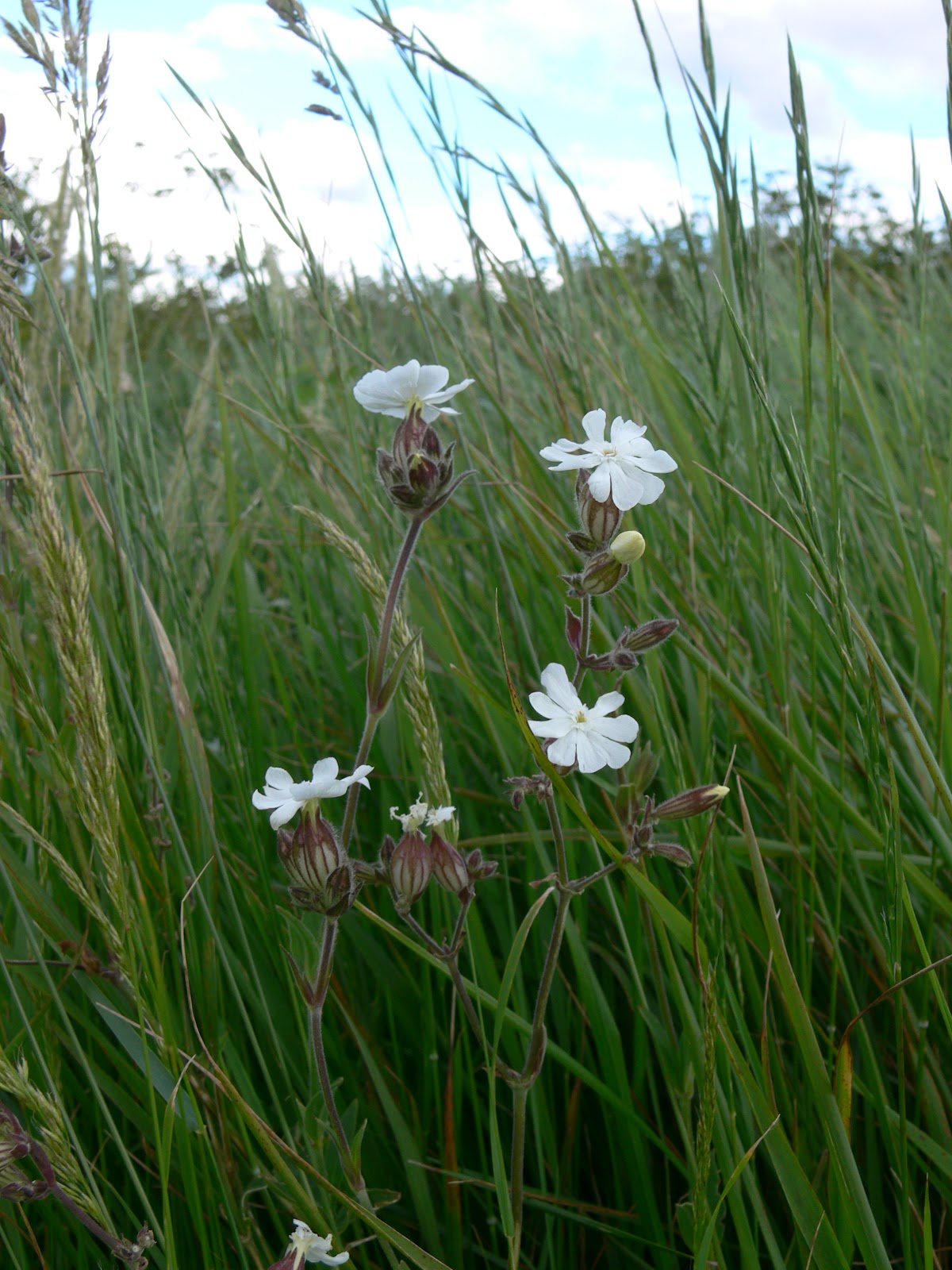
Bladder campion - worth coming back to next spring for the sweet young shoots and leaves


All along this grassy bank are ox eye daisies (young leaves, unopened flower heads chopped in salads, or flowers, petals added later) most of the common "greens/wild leaves" & thistles.

Below the tide line

Sea Weeds


bright green Sea-lettuce is abundant in the rock pools of the chalk reef, as are dulse, bladder wracks, and the odd frond of kelp in the deep water.  salads to sushi via stir-fries - take your pick.

Shell fish - (although the water's a little warm to guarantee quality during summer months in Kent, and they should be left to breed in peace)

native oysters - though observe minimum sizes (these are all too small)
and also winkles by the bucket load - For the patient ones amongst us - boil up a bucket of winkles, then pick them out with a pin for a mini snail feast


Pacific Rock Oysters (foreign imports - invasive - so no minimum size - fill your buckets!)
best used shucked, and cooked - wrapped and grilled (http://foragersnook.blogspot.co.uk/2012/05/wild-oysters-marsh-samphire.html) - or added to paella's, or even Beef and Oyster stew or pies - for a taste of old London town.


in deeper waters there are also mussels - perfect for a winter paella.

and don't forget to turn the rocks carefully - a bucket of big shorecrabs makes a scrimpers version of lobster bisque - pick out the larger claw meat once boiled, blitz the rest, strain, and follow any good receipe for a lobster bisque.

The rock pools are also teaming with little shrimps - with a net, worth a bit of fun catching the bigger ones, boil and pick from the shells for sweet tasty morsels.


Tj@TheForagersNook